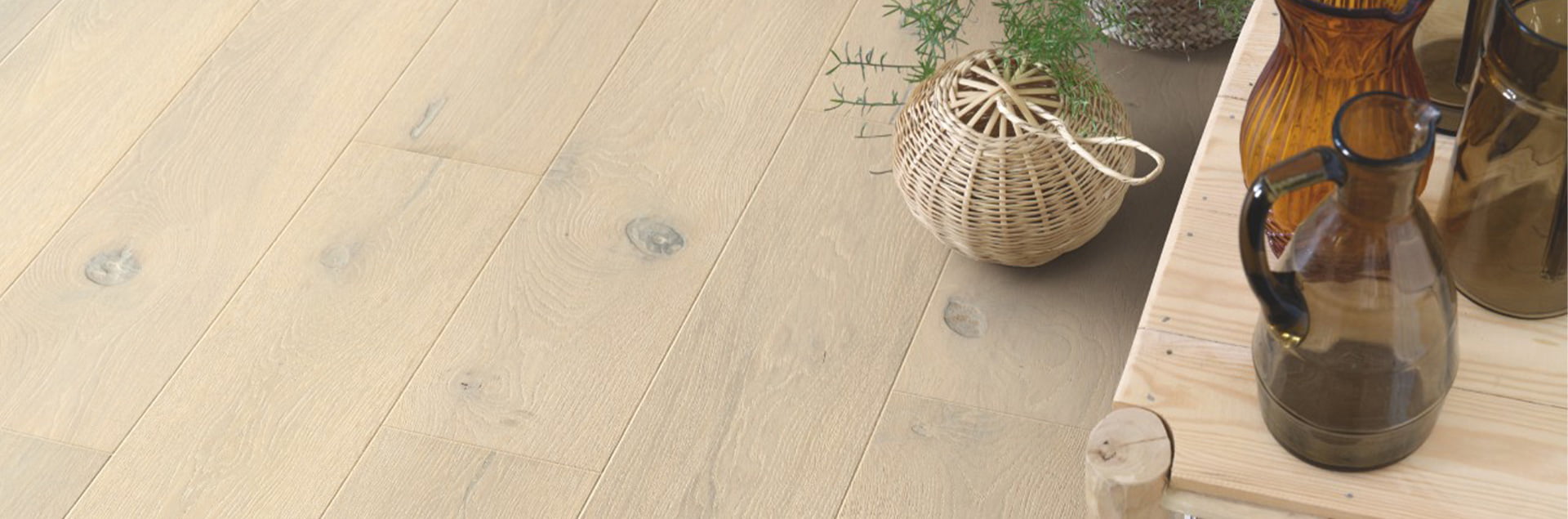
is sustainable
Hardwood Hoa
Fast hardwood table: treat wood with respect
Our hardwood floors - or engineered wood floors - symbolize carefree living and natural beauty. The only way to continue to enjoy the beautiful things our planet has to offer is to be careful with what it offers us. That's why we produce hardwood floors that are as sustainable as possible.
Use wood economically
Be careful with slow growing plants
Trees play an important role in fighting climate change by absorbing CO2 and stimulating biodiversity. That means we have to handle them carefully, especially slow-growing species like oaks. That's why we only use these species in the top layers of our hardwood floors.
Use reclaimed or fast-growing wood
The core of our hardwood floors consists of wood from fast-growing trees (ruce, hevea...) or high-density fiberboard (HDF) made of reclaimed wood. This wood is collected from, for example, mills, sustainable forest management and road maintenance processes. As such, we use different types of wood in the most effective way.
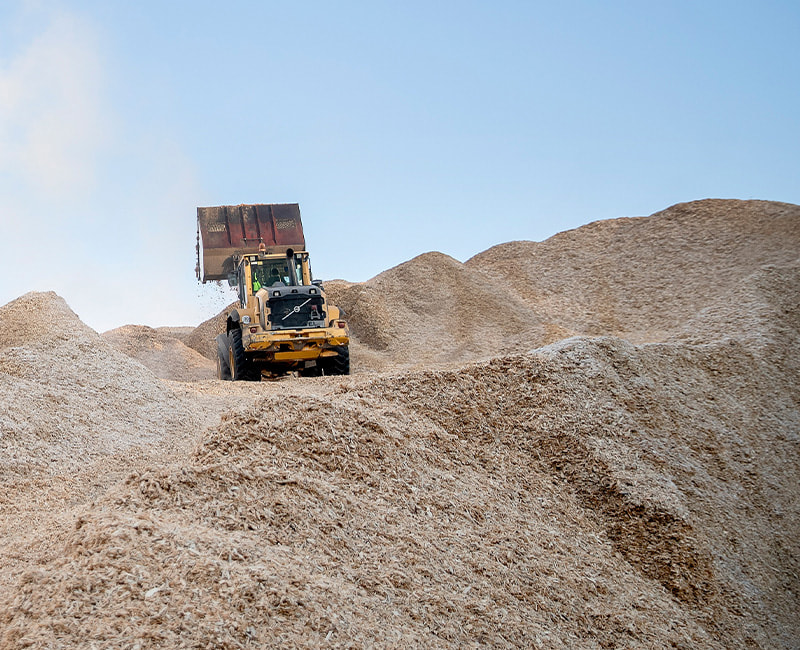
Get creative with wood waste
Variano and Intenso ranges are two of our latest efforts to produce sustainable wood floors. We create unique designs using small pieces of wood that would otherwise go to waste. That's how we make the most of every tree, and you'll have high-quality flooring for your home.
Sustainable forest management
Wood can be an infinite resource if we manage forests sustainably. By using wood from sustainably managed forests, our wood supply does not contribute to deforestation. We also use firewood from controlled sources, protect primary forest areas and prevent illegal logging with a risk analysis.
Our PEFC mark - the most trusted certification on the subject, along with FSC - proves that the wood on your hardwood floors has been sustainably sourced.
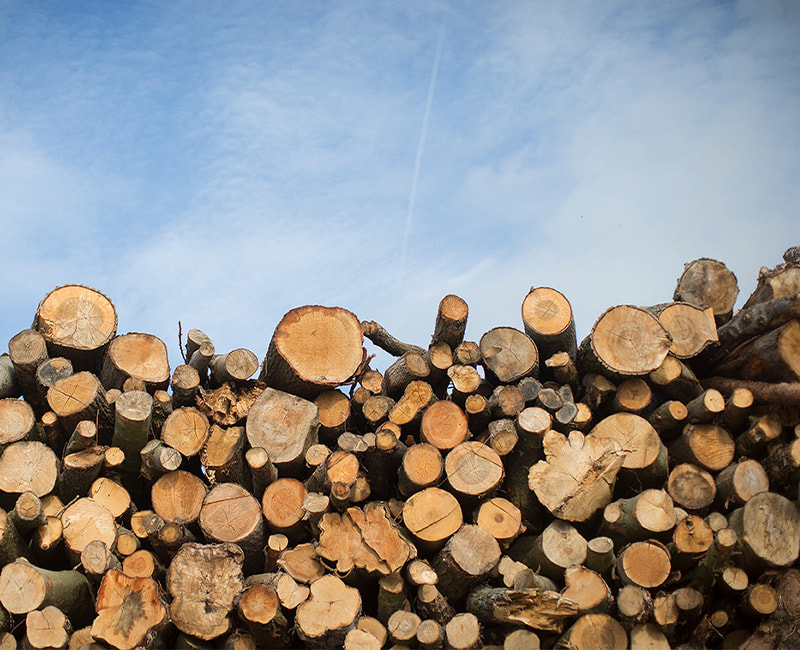
We aim for wooden floors with 100% PEFC or FSC by 2027.
Clean air
produces furniture
Indoor air quality is extremely important, and many factors have an impact on it: ventilation, candles, cleaning agents and even the materials used in your interior, such as flooring. We know exactly what materials go into our hardwood floors because we manufacture them in-house as much as possible. By doing so, we try to minimize the emission of VOCs (volatile organic compounds) - which can be caused by the use of glues, lacquers and oils - making
Ultra low emission
An example of a VOC is formaldehyde and occurs naturally in wood. Formaldehyde emissions on our hardwood floors are significantly lower than EU restrictions. This is reflected in our A label, which is a highly regarded emission regulation certificate that serves as an accreditation for very low emissions.
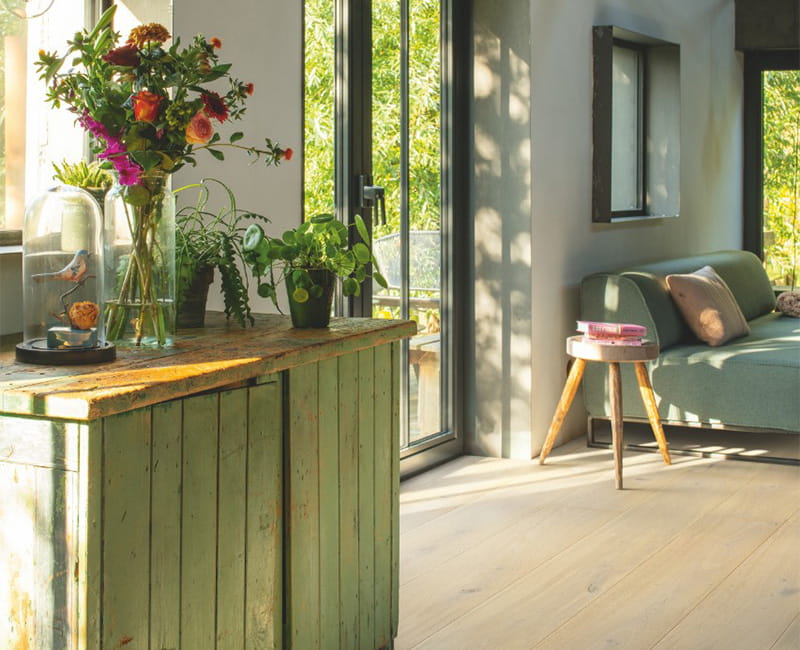
Runs on green energy
Wood scraps as heat source
The excess wood and wood dust meet about 90% of the heat demand when producing engineered wood floors. Quick-Step utilizes wood dust from manufacturing and used wood to generate heat.
CO limit2 emissions
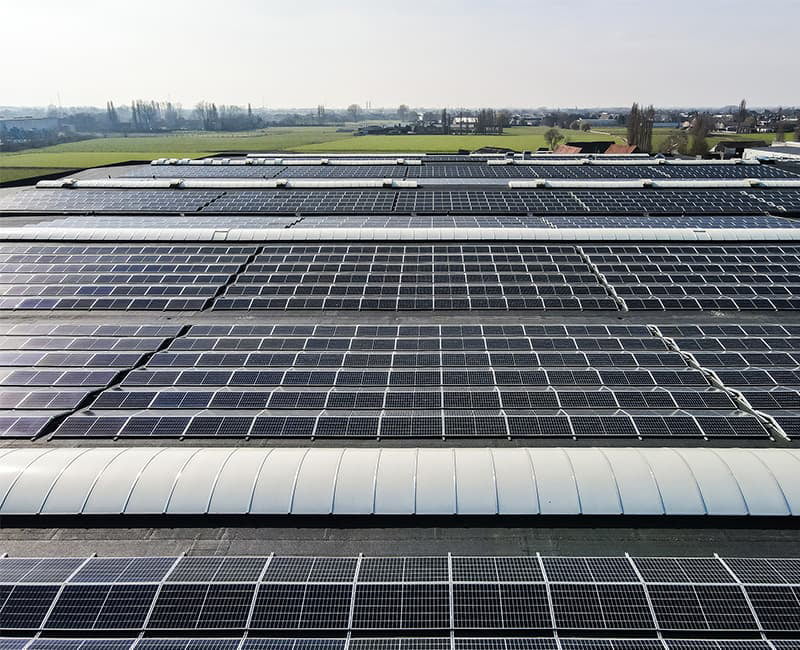
Unilin - the team behind Quick-Step - has invested in two biomass plants to convert wood dust and non-recyclable wood waste into green energy for our own production processes and the energy needs of the general public. We also rely on power from windmills and solar panels. Thus, we avoid more than 60,000 tons of CO2 emissions annually.
Minimal environmental impact
We apply the strictest criteria when it comes to safety, health and sustainability. To truly minimize our environmental impact, we use life cycle assessment (LCA) to calculate which stages of the hardwood life cycle we can improve. This results in an environmental product declaration (EPD), which we track meticulously.
The following labels demonstrate that our hardwoods comply with some of the most stringent environmental and health standards:
-
A
-
EPD
-
PEFC